TIG welding and Stick welding are two of the most important processes for anyone interested in becoming a professional welder. Both are widely used across industries, but they require different techniques, equipment, and levels of control. Understanding the differences between TIG vs. Stick welding can help welding students determine which skills they should develop and what employers may expect when hiring for different types of welding jobs.
TIG welding, also known as Gas Tungsten Arc Welding or GTAW, is known for precision and clean welds, while Stick welding, or Shielded Metal Arc Welding (SMAW), is valued for its versatility and ability to perform reliably in demanding environments. Many professional welders eventually learn both because employers often look for workers who can adapt to different materials, welding positions, and jobsite conditions.
What Is TIG Welding?
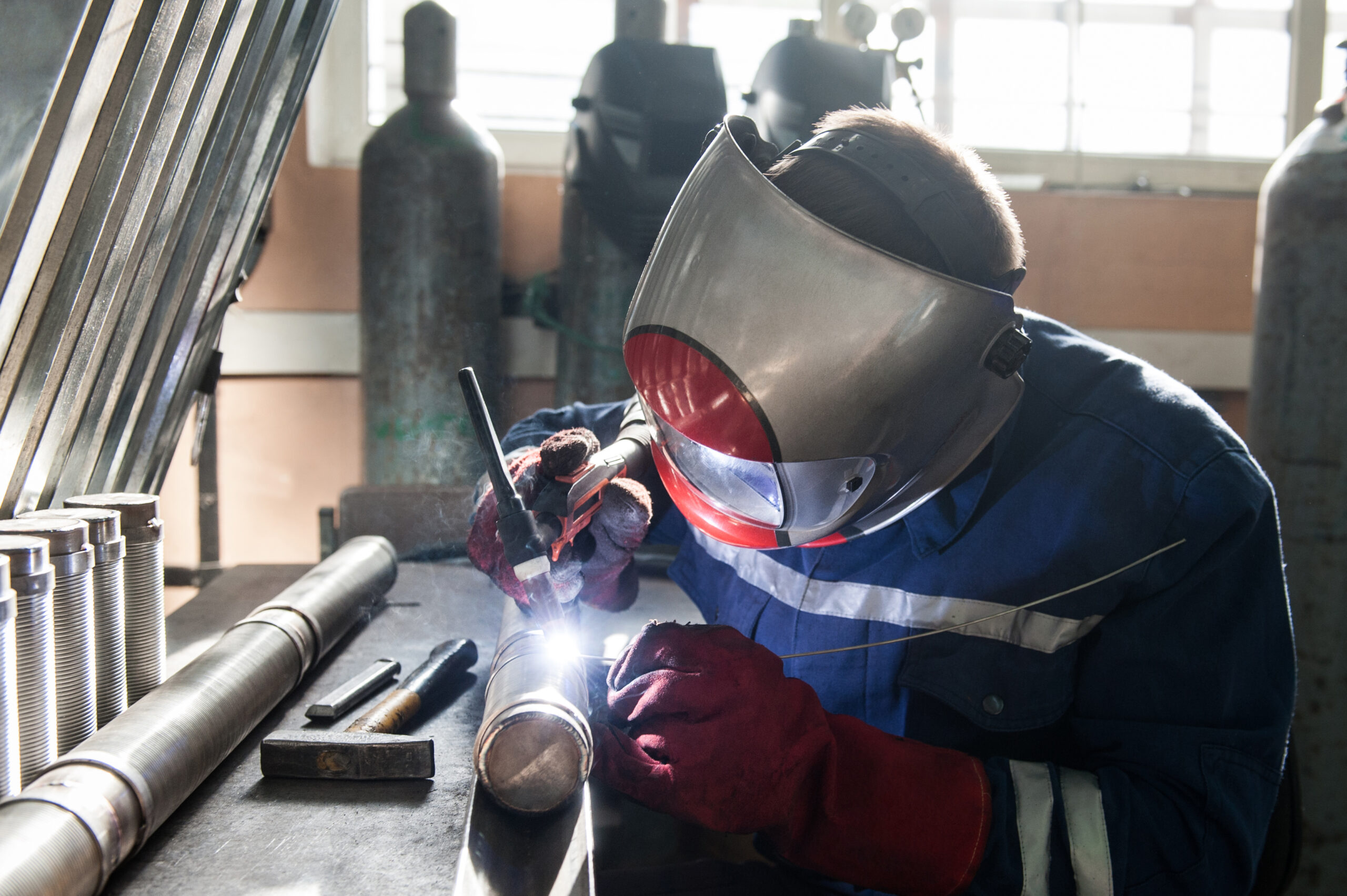
TIG welding uses a non-consumable tungsten electrode to create the welding arc. In many applications, the welder manually feeds filler metal into the weld pool while controlling the torch, which requires coordination and precise control.
One of the main advantages of TIG welding is the level of control it provides. Skilled TIG welders can produce clean, accurate welds with relatively little spatter, making the process useful when appearance, precision, and weld quality are important.
TIG welding can be used on materials such as stainless steel, aluminum, carbon steel, and other metals depending on the equipment and application. Because of this versatility, GTAW skills can be valuable in fabrication, pipe welding, manufacturing, aerospace-related work, food-processing equipment, and other industries requiring precise welds.
What Is Stick Welding?
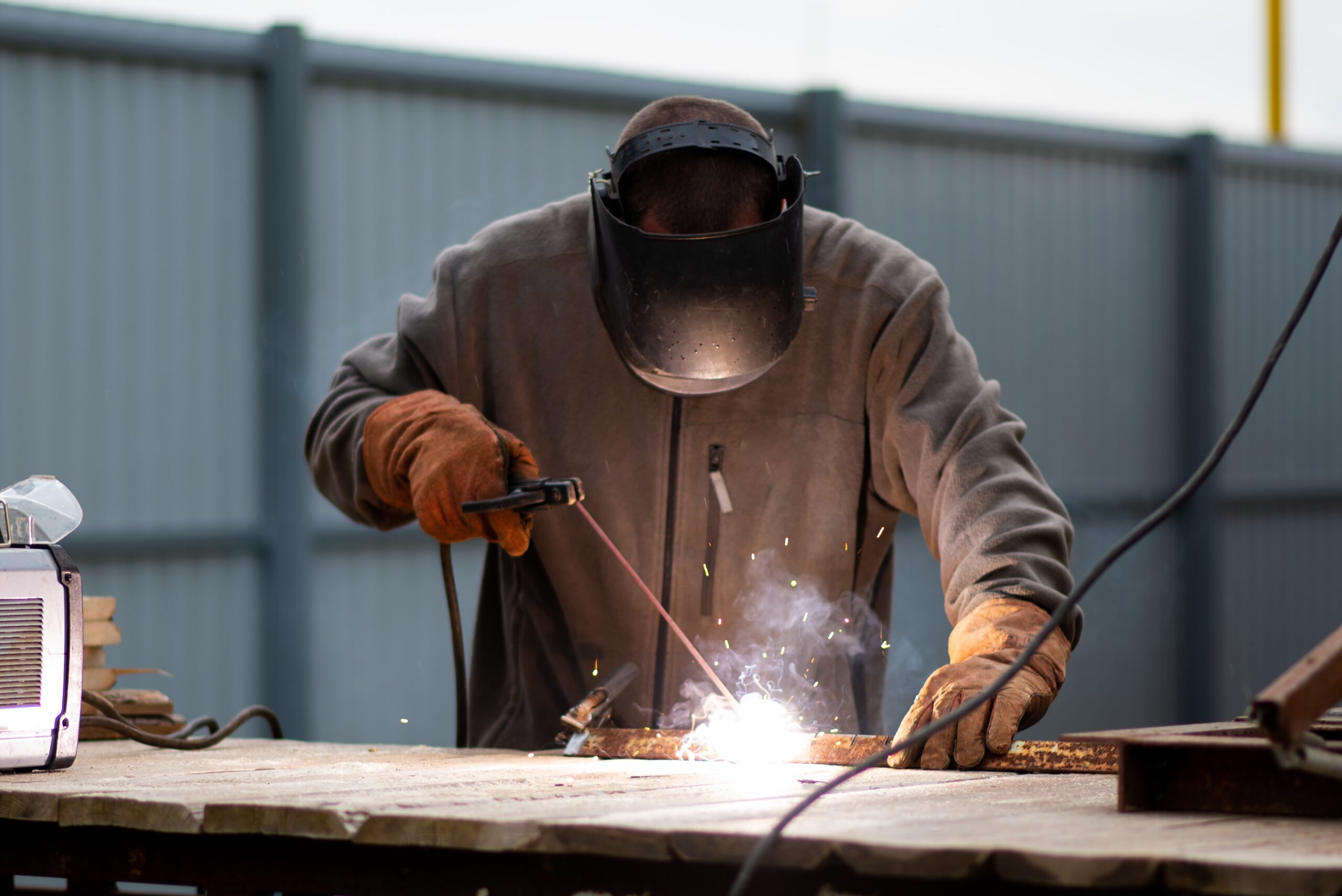
Stick welding uses a flux-coated consumable electrode that melts as the weld is created. The process is formally known as Shielded Metal Arc Welding and is commonly referred to as SMAW.
Stick welding equipment is relatively simple and portable, making the process suitable for construction sites, structural projects, maintenance work, pipeline applications, and outdoor environments.
Unlike some welding processes that are highly sensitive to wind, Stick welding can often be performed effectively in outdoor conditions. This makes SMAW an important skill for welders who plan to work in construction, structural welding, heavy equipment repair, industrial maintenance, or pipeline-related jobs.
TIG vs. Stick Welding: Main Differences
Although TIG and Stick welding both use an electric arc to join metals, the techniques and applications are significantly different.
| Feature | TIG Welding | Stick Welding |
|---|---|---|
| Formal process | Gas Tungsten Arc Welding (GTAW) | Shielded Metal Arc Welding (SMAW) |
| Electrode | Non-consumable tungsten electrode | Consumable flux-coated electrode |
| Precision | High | Moderate to high depending on application |
| Welding speed | Generally slower | Often faster for many field applications |
| Weld appearance | Clean and controlled | More slag and cleanup may be required |
| Outdoor use | More sensitive to wind | Well suited for many outdoor environments |
| Skill coordination | Requires significant torch and filler control | Requires strong electrode and arc control |
| Common uses | Precision fabrication, stainless steel, aluminum, pipe | Construction, structural welding, pipelines, repair |
| Cleanup | Generally minimal | Slag typically must be removed |
Neither process is automatically better. The right welding process depends on the material, working conditions, weld specifications, and industry requirements.
Is TIG Welding Harder Than Stick Welding?
TIG welding is often considered technically demanding because the welder may need to control several elements simultaneously. Maintaining the correct torch angle, arc length, travel speed, filler rod placement, and heat input requires coordination that develops through practice.
Beginning TIG welders often spend significant time learning how to maintain a stable weld pool and add filler material consistently without contaminating the tungsten electrode.
Stick welding presents different challenges. Welders must maintain the proper arc length while the electrode continuously becomes shorter as it burns. They must also control travel speed and electrode angle while managing slag formation.
Advanced Stick welding positions such as vertical, overhead, and pipe welding require considerable skill. For this reason, both processes can become challenging as welders progress to more demanding applications.
What Skills Do TIG Welders Need?
Employers looking for TIG welders may expect candidates to demonstrate precise control and an understanding of how different variables affect weld quality.
Important TIG welding skills can include:
- Maintaining proper torch angle and arc length
- Controlling heat input
- Feeding filler material consistently
- Preparing and cleaning materials before welding
- Selecting the correct tungsten electrode
- Understanding shielding gas requirements
- Welding different joint configurations
- Recognizing common weld defects
- Maintaining consistent travel speed
- Welding in multiple positions
Experienced TIG welders may also need to work with different metals and thicknesses while meeting specific quality standards.
For pipe welding positions, employers may require additional skills such as open-root welding, walking the cup, controlling penetration, and welding pipe in fixed positions.
What Skills Do Stick Welders Need?
Stick welders must be able to maintain a stable arc while controlling the electrode as it melts. Proper technique is essential for achieving adequate penetration and avoiding problems such as porosity, undercut, slag inclusions, or incomplete fusion.
Common skills employers may look for include:
- Proper electrode selection
- Consistent arc length
- Correct electrode angle
- Controlled travel speed
- Ability to weld in different positions
- Understanding welding polarity and amperage
- Cleaning slag between passes
- Identifying weld defects
- Preparing joints correctly
- Maintaining consistent bead placement
Welders may train with common electrodes such as E6010 and E7018 because they are frequently used in structural and pipe welding applications.
Understanding when and how to use different electrodes is an important part of developing professional SMAW skills.
TIG vs. Stick Welding for Pipe Welding
Both TIG and Stick welding are commonly associated with pipe welding, and some jobs require welders to understand both processes.
Depending on the procedure, TIG welding may be used to create a controlled root pass while Stick welding may be used for additional passes. Other applications may rely primarily on one process.
Pipe welders must learn how to control penetration while moving around the entire circumference of a pipe. Positions such as 5G and 6G are especially challenging because the pipe remains fixed and the welder must adjust body position, torch or electrode angle, and technique throughout the weld.
For students interested in becoming pipe welders, learning both GTAW and SMAW can provide exposure to a wider range of welding techniques.
Which Welding Process Is Better for Outdoor Work?
Stick welding is generally more practical for outdoor welding because the flux coating on the electrode creates shielding around the weld pool as the electrode burns.
TIG welding relies on an external shielding gas, which can be disrupted by wind. Losing adequate gas coverage can lead to contamination and defects in the weld.
Because of this difference, Stick welding is commonly used on construction sites, pipelines, structural projects, and other environments where welding conditions may not be fully controlled.
TIG welding is generally better suited to environments where shielding gas coverage and welding conditions can be carefully managed.
Which Process Produces Cleaner Welds?
TIG welding is known for producing clean, precise welds with minimal spatter. Because the tungsten electrode does not become part of the weld and there is no flux coating creating slag, cleanup is typically limited when the process is performed correctly.
Stick welding produces slag that covers the weld as it cools. Welders must remove this layer before inspecting the weld or depositing another pass where required.
However, weld appearance alone does not determine weld quality. A visually attractive weld can still contain defects, while a properly executed Stick weld can meet demanding structural or industrial requirements.
Professional welders must understand penetration, fusion, joint preparation, electrode or filler selection, and applicable procedures rather than focusing only on appearance.
Do Employers Prefer TIG or Stick Welding?
Employer requirements depend heavily on the type of work being performed.
A fabrication company working primarily with stainless steel may place greater value on TIG welding skills, while a structural construction company may prioritize SMAW experience. Pipeline and industrial employers may seek welders who can perform multiple processes.
Instead of asking whether employers prefer TIG or Stick welding overall, welding students should consider the industries they want to enter.
For example:
| Career Area | Skills That May Be Valuable |
|---|---|
| Structural welding | Stick welding, multiple welding positions, electrode control |
| Pipe welding | TIG, Stick, open-root techniques, fixed pipe positions |
| Precision fabrication | TIG welding, material preparation, heat control |
| Construction | Stick welding, structural joints, field welding |
| Industrial maintenance | Multiple welding processes and repair techniques |
| Stainless steel fabrication | TIG welding and heat control |
| Pipeline work | Stick welding and advanced pipe welding skills |
Job requirements vary between employers, projects, codes, and industries, so welders may be required to complete a welding test before being hired or assigned to specific work.
What Welding Positions Should Students Learn?
Knowing a welding process is only part of becoming job-ready. Employers may also expect welders to demonstrate their skills in different positions.
Students may practice plate welding in positions such as:
- 1G or flat
- 2G or horizontal
- 3G or vertical
- 4G or overhead
Pipe welding training can also include positions such as:
- 1G
- 2G
- 5G
- 6G
The 6G pipe welding position is especially useful for advanced training because the pipe is fixed at an angle. This forces the welder to adjust technique continuously while moving around the joint.
Developing experience in multiple positions can help students prepare for a broader range of welding tests and workplace situations.
What Do Employers Look for in a Welder?
Knowing how to run a TIG torch or Stick electrode is important, but employers may evaluate much more than one welding technique.
Depending on the job, they may consider:
- Ability to produce consistent welds
- Knowledge of welding safety
- Experience with required welding processes
- Ability to follow welding procedures
- Understanding of welding symbols and blueprints
- Material preparation skills
- Ability to identify and correct weld defects
- Experience welding in multiple positions
- Reliable equipment setup and operation
- Ability to pass an employer welding test
Employers may also value welders who can adapt to different tasks rather than relying on only one process.
For students, this is one reason comprehensive hands-on welding training can be valuable. Developing multiple welding skills can provide more flexibility when exploring career opportunities.
Should You Learn TIG or Stick Welding First?
The best process to learn first depends on the structure of the welding training program and the student’s career goals.
Stick welding can help students develop fundamental skills such as maintaining arc length, controlling travel speed, understanding penetration, and working in different welding positions.
TIG welding can help develop precise weld pool control, coordination, heat management, and filler metal techniques.
Rather than limiting training to one process, students interested in professional welding careers may benefit from learning both as their skills progress.
A structured welding program can introduce techniques in an order that allows students to develop fundamental skills before moving into advanced welding applications.
Why Learning Multiple Welding Processes Can Matter
Modern welders may encounter different welding processes throughout their careers. A welder who begins in structural fabrication could later move into pipe welding, industrial maintenance, manufacturing, or another specialized field.
Learning TIG welding and Stick welding provides experience with two very different approaches to controlling an arc and weld pool.
Students may also continue learning additional processes such as MIG welding or Flux-Cored Arc Welding as they develop their careers.
The more processes a welder understands, the better prepared they may be to adapt to different job requirements, although each employer will have its own qualifications and expectations.
TIG vs. Stick Welding: Which Skill Should You Develop?
TIG and Stick welding serve different purposes, and both can be valuable skills for professional welders. TIG welding emphasizes precision, control, clean welds, and careful heat management, while Stick welding is highly versatile and widely used for structural, construction, repair, and field applications.
Students deciding between TIG vs. Stick welding should consider the type of welding jobs they want to pursue rather than choosing solely based on which process seems easier.
For someone interested in building a broader welding career, developing skills in both GTAW and SMAW can provide a stronger technical foundation. Hands-on welding training allows students to practice these processes, work through different welding positions, identify defects, improve consistency, and prepare for the welding tests they may encounter when pursuing employment.