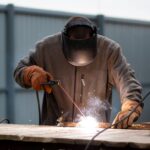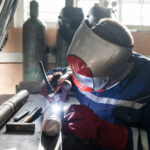
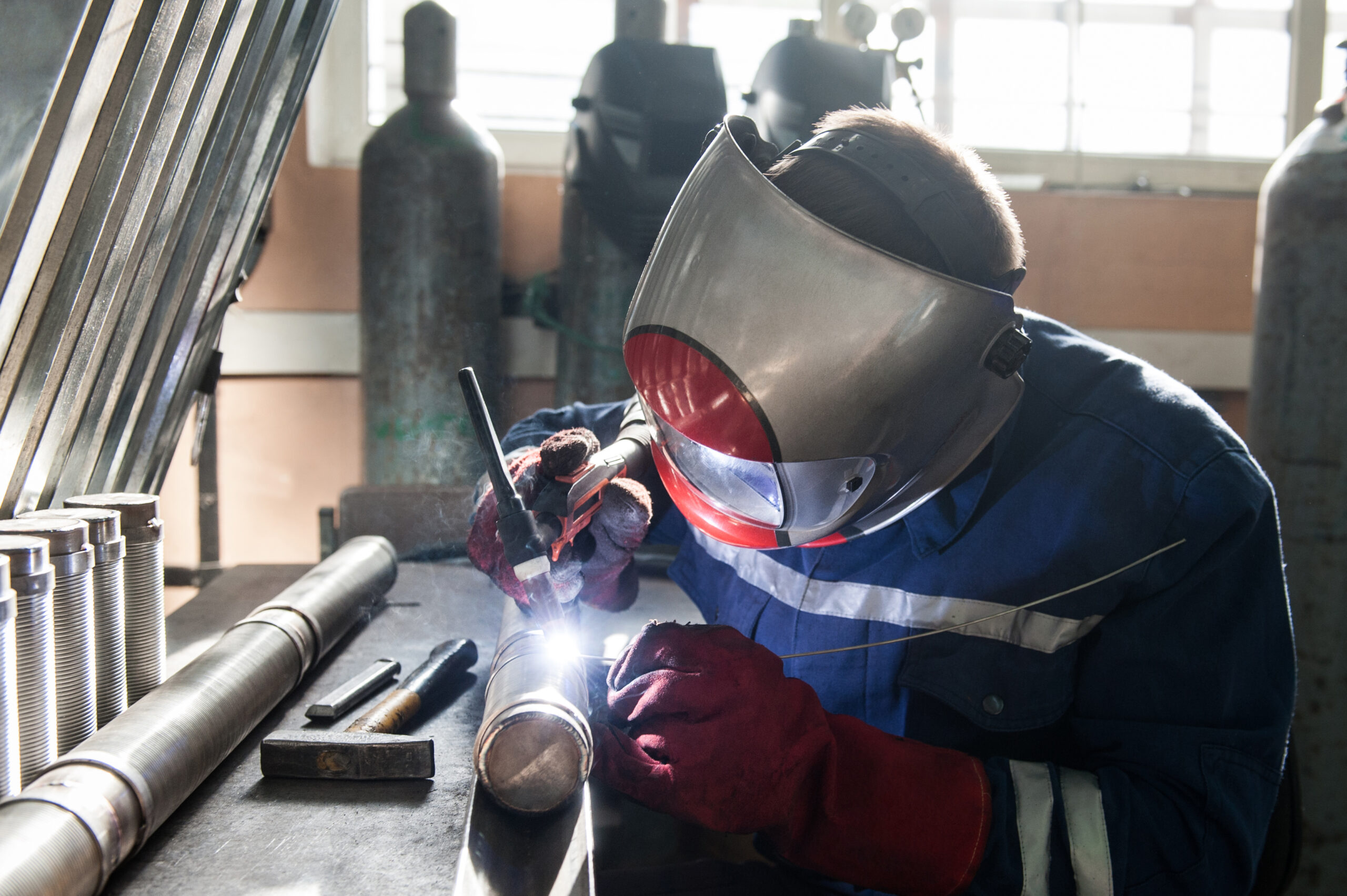
A pipe welder specializes in joining, repairing, and maintaining metal piping systems used in industries such as construction, manufacturing, energy, oil and gas, power generation, and industrial maintenance. Unlike basic welding work performed on flat plates or simple structures, pipe welding requires the ability to control the weld around curved surfaces and often in difficult positions where the pipe cannot be moved.
Because pipe systems may carry liquids, gases, steam, or other materials under pressure, pipe welders must produce consistent welds that meet the requirements of the specific project, employer, and applicable welding procedures. For people considering a welding career, pipe welding can be an advanced specialization that requires strong technical skills, hands-on training, and significant practice.
What Is a Pipe Welder?
A pipe welder is a skilled tradesperson who welds sections of pipe together or repairs existing piping systems. The job can involve working with different pipe sizes, wall thicknesses, materials, welding processes, and joint configurations.
Pipe welders may work in fabrication shops or directly on construction and industrial sites. Depending on the project, the work environment can include refineries, manufacturing plants, commercial facilities, pipelines, power plants, mechanical systems, and other industrial locations.
The exact responsibilities vary by employer, but most pipe welders are expected to understand joint preparation, welding procedures, safety requirements, welding positions, equipment setup, and weld quality.
What Does a Pipe Welder Do on the Job?
The daily responsibilities of a pipe welder can include much more than simply running a weld bead. Proper preparation and inspection are important parts of the work.
Common pipe welding responsibilities may include:
- Reading blueprints and welding symbols
- Reviewing welding procedures and project specifications
- Preparing pipe joints before welding
- Cleaning and beveling pipe edges
- Aligning pipe sections
- Tack welding components into position
- Setting up welding machines and equipment
- Selecting electrodes or filler materials
- Welding pipe in multiple positions
- Cleaning welds between passes
- Inspecting completed welds for visible defects
- Repairing welds when necessary
- Following jobsite safety procedures
In some workplaces, pipe welders may also assist with fitting, measuring, cutting, grinding, and preparing pipe before welding begins.
What Welding Processes Do Pipe Welders Use?
Pipe welders may use several different welding processes depending on the project and employer requirements.
Stick Welding
Shielded Metal Arc Welding, commonly known as Stick welding or SMAW, is widely used for pipe welding because the equipment is portable and the process can perform well in demanding environments.
Pipe welders may use electrodes such as E6010 and E7018 depending on the welding procedure and application. Developing strong electrode control is especially important because pipe welders must maintain consistent penetration and bead placement while moving around the pipe.
TIG Welding
Gas Tungsten Arc Welding, commonly called TIG welding or GTAW, is often used when precise control and clean welds are required.
TIG welding may be used for root passes in pipe welding applications because it allows the welder to carefully control penetration and the weld pool. It can also be used on stainless steel and other materials where cleanliness and heat control are especially important.
MIG and Flux-Cored Welding
Some pipe fabrication environments also use Gas Metal Arc Welding, or MIG welding, and Flux-Cored Arc Welding.
These processes can provide higher deposition rates and may be useful in certain fabrication or production settings. However, the welding process used will depend on the material, job requirements, welding procedure, and work environment.
What Are Pipe Welding Positions?
One of the biggest challenges in pipe welding is learning how to weld in different positions. Unlike flat plate welding, the angle of the joint changes continuously as the welder moves around the pipe.
Common pipe welding positions include:
1G Pipe Welding
In the 1G position, the pipe is horizontal and can rotate while the welder remains in approximately the same position.
This is often one of the first pipe welding positions students practice because rotation makes it easier to maintain a consistent angle and travel direction.
2G Pipe Welding
In the 2G position, the pipe is positioned vertically and does not rotate.
The welder must move horizontally around the circumference of the pipe while maintaining control of the weld pool.
5G Pipe Welding
In the 5G position, the pipe is horizontal but fixed in place.
Because the pipe cannot rotate, the welder must move around it and adjust technique as the welding position changes. This requires greater control and body positioning compared with 1G welding.
6G Pipe Welding
The 6G position is one of the most challenging pipe welding positions. The pipe is fixed at an angle, which requires the welder to work through several welding positions during the same joint.
Students interested in advanced pipe welding often spend considerable time practicing 6G because it helps develop control in a variety of angles and positions.
What Skills Does a Pipe Welder Need?
Pipe welding requires a combination of technical knowledge, coordination, consistency, and problem-solving skills.
Important pipe welding skills can include:
- Maintaining a consistent arc
- Controlling weld penetration
- Managing travel speed
- Controlling electrode or torch angle
- Understanding joint preparation
- Reading welding symbols
- Following welding procedures
- Recognizing weld defects
- Working in fixed pipe positions
- Managing heat input
- Cleaning between weld passes
- Using grinders and preparation tools safely
A pipe welder must also understand how small changes in technique can affect the finished weld.
For example, improper travel speed or incorrect electrode angle can contribute to defects such as undercut, porosity, lack of fusion, or incomplete penetration.
How Important Is Joint Preparation in Pipe Welding?
Joint preparation is extremely important because the condition and alignment of the pipe can directly affect weld quality.
Before welding, pipe ends may need to be cleaned, beveled, measured, and positioned with the correct root opening.
Pipe welders must pay attention to factors such as:
- Bevel angle
- Root face
- Root gap
- Pipe alignment
- Surface cleanliness
- Tack weld placement
Poor preparation can make it difficult to maintain consistent penetration or produce a sound weld.
This is why professional pipe welding training should include both welding technique and proper preparation procedures.
What Is an Open-Root Pipe Weld?
An open-root weld is a pipe joint where there is a small gap between the pieces being joined and no backing material directly behind the root of the weld.
The welder must control the root pass carefully to achieve proper penetration without creating excessive buildup or burning through the joint.
Open-root pipe welding requires strong control of arc length, travel speed, heat input, and filler placement.
Students may practice open-root welding using processes such as Stick or TIG welding depending on the training program and procedure.
What Is the Difference Between a Pipe Welder and a Pipefitter?
Pipe welders and pipefitters often work closely together, but their responsibilities are not identical.
A pipefitter focuses on measuring, cutting, assembling, aligning, and installing piping systems. A pipe welder focuses primarily on creating welded joints that permanently connect the pipe sections.
Some workers develop skills in both areas, especially in fabrication and industrial environments.
Understanding fitting can also benefit welders because proper alignment and preparation make the welding process more efficient and consistent.
How Do You Become a Pipe Welder?
The path to becoming a pipe welder usually begins with learning basic welding fundamentals before progressing to advanced pipe welding techniques.
A typical training path may include:
- Learning welding safety and equipment setup
- Practicing basic weld beads
- Learning common joint configurations
- Developing Stick, TIG, or other welding process skills
- Practicing plate welding in multiple positions
- Beginning pipe welding in easier positions
- Progressing to 5G and 6G pipe welding
- Practicing open-root joints and multipass welds
- Preparing for employer or industry qualification tests
Students should expect pipe welding to require substantial practice because consistency is critical.
How Long Does It Take to Learn Pipe Welding?
There is no exact timeline for becoming a pipe welder because progress depends on previous experience, training schedule, welding process, practice time, and the level of skill required.
Someone with no welding experience typically needs to learn basic welding techniques before moving into pipe welding. Students who already have strong SMAW or GTAW skills may progress faster.
Basic pipe welding concepts can be introduced relatively quickly, but becoming proficient in fixed-position and open-root pipe welding can require months of focused practice.
Advanced positions such as 6G usually require significantly more training than basic flat or horizontal welding.
Do Pipe Welders Need Certifications?
Certification requirements vary by employer, industry, project, and welding code.
Some employers require welders to pass a specific welding performance qualification test before they can perform production work. The test may specify the welding process, pipe diameter, material, wall thickness, and welding position.
For example, a welder may be tested using a specific pipe position and welding process that reflects the work expected on the job.
Completing welding school does not automatically qualify a person for every pipe welding job. Employers may require additional testing to verify that the welder can perform according to the required procedure.
What Should Students Expect From Pipe Welding Training?
Pipe welding training should include significant hands-on practice.
Students may begin by learning how to prepare joints and position pipe correctly before practicing root passes, fill passes, and cap passes.
Training may also include:
- Stick pipe welding
- TIG pipe welding
- Open-root welding
- Electrode selection
- Filler metal control
- 1G, 2G, 5G, and 6G positions
- Pipe joint preparation
- Weld defect identification
- Multipass welding
- Welding safety
- Equipment setup
A strong training program should give students enough practice to understand not only how to complete a weld but also how to identify and correct problems.
Where Do Pipe Welders Work?
Pipe welders can work in many industries because piping systems are used in a wide range of facilities and infrastructure projects.
Potential work environments include:
- Oil and gas facilities
- Pipeline construction
- Refineries
- Power generation facilities
- Manufacturing plants
- Commercial construction
- Industrial maintenance
- Mechanical contractors
- Fabrication shops
- Water and utility projects
Some jobs are performed primarily in controlled shop environments, while others require travel or outdoor fieldwork.
Work conditions can vary significantly depending on the industry and project.
What Career Opportunities Are Available for Pipe Welders?
Pipe welding skills can support several career paths within the welding and industrial trades.
A welder may begin in an entry-level fabrication or structural position and later specialize in pipe welding after developing additional skills.
Possible career directions include:
| Career Path | Typical Focus |
|---|---|
| Pipe Welder | Welding pipe joints in shop or field environments |
| Combination Welder | Performing multiple welding processes and applications |
| Pipeline Welder | Welding pipe used in pipeline construction and maintenance |
| Industrial Welder | Welding and repairing equipment and piping systems |
| Fabrication Welder | Building components and pipe assemblies in a shop |
| Maintenance Welder | Repairing piping, equipment, and industrial systems |
| Structural Welder | Welding structural components and supports |
| Welder-Fitter | Combining welding with fitting and assembly skills |
Career opportunities depend on experience, welding qualifications, industry conditions, location, and employer requirements.
Are Pipe Welding Skills in Demand?
Pipe welding is used in industries where piping systems are essential, including energy, manufacturing, utilities, construction, and industrial maintenance.
Employers hiring pipe welders may look for candidates who can demonstrate consistent weld quality, work in difficult positions, follow welding procedures, and pass required welding tests.
Having experience in multiple processes can also be useful because some projects require different welding techniques for different stages of the joint.
A welder who can perform both TIG and Stick welding, for example, may be able to pursue a broader range of pipe welding opportunities.
What Do Employers Look for in a Pipe Welder?
Employers typically evaluate practical ability rather than relying only on classroom credentials.
They may look for skills such as:
- Ability to pass a pipe welding test
- Experience with required welding processes
- Consistent root penetration
- Clean fill and cap passes
- Knowledge of welding safety
- Ability to interpret welding procedures
- Experience in fixed pipe positions
- Proper joint preparation
- Familiarity with welding defects
- Reliability and attention to detail
Depending on the position, employers may also value blueprint reading, fitting experience, fabrication skills, and the ability to work in industrial environments.
Is Pipe Welding a Good Career Path?
Pipe welding can be a strong career path for people who enjoy technical, hands-on work and are willing to spend time developing advanced welding skills.
It can be more demanding than basic production welding because pipe welders often work in difficult positions and must maintain consistent weld quality throughout the joint.
However, the advanced skills required for pipe welding can also open opportunities in specialized industries.
Students interested in this career should focus on developing a strong foundation in welding fundamentals before progressing to advanced pipe positions.
Building the Skills for a Pipe Welding Career
Becoming a pipe welder requires more than learning a single welding process. Successful pipe welders develop control, consistency, technical knowledge, joint preparation skills, and the ability to adapt to different welding positions.
Hands-on welding training can help students build these skills in a structured environment while gaining experience with processes such as Stick welding and TIG welding.
For students interested in industrial welding, pipeline work, fabrication, or combination welding, pipe welding training can provide a valuable foundation for pursuing specialized welding career opportunities.