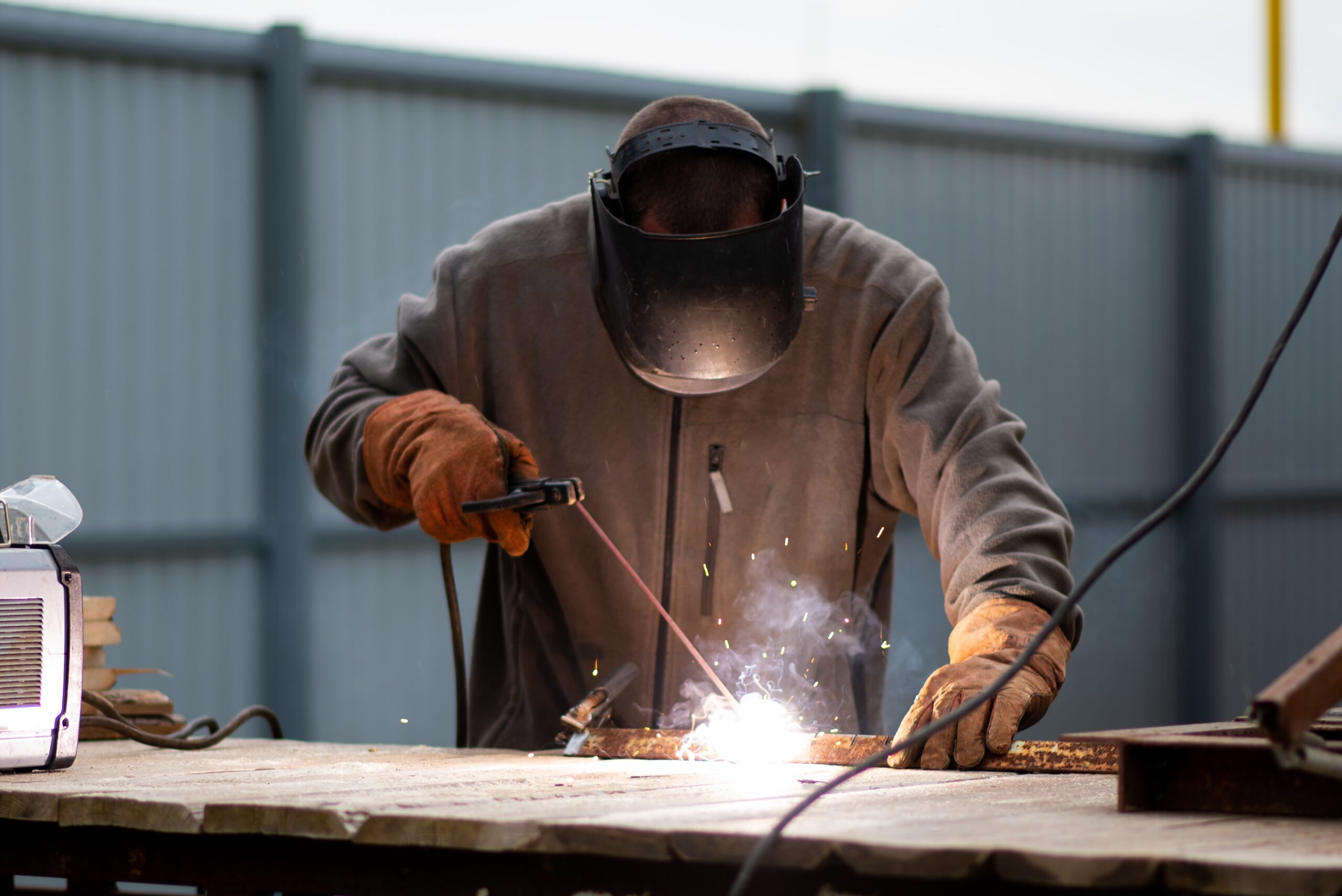
You do not necessarily need a welding certification to get every welding job in Texas, but many employers require candidates to prove that they can perform the specific type of welding needed for the position. In practice, this often means passing a welding test, holding a recognized welding qualification, or demonstrating experience with processes such as Stick welding, TIG welding, MIG welding, structural welding, or pipe welding.
For someone starting a welding career in Texas, the most important thing to understand is that there is no single welding certification that automatically qualifies a welder for every job. Requirements can change depending on the employer, industry, welding process, material, welding position, applicable code, and type of project.
Do Welders Need a License in Texas?
Welding is different from occupations that require one universal state license before a person can begin working. For many welding jobs, employers focus primarily on whether the candidate can safely and consistently perform the required welds.
That does not mean certifications are unimportant. Structural steel companies, pipe welding employers, fabrication shops, industrial contractors, and other businesses may require welders to complete performance qualification tests before they are allowed to perform certain work.
These tests are designed to verify practical ability rather than simply confirm that someone completed a welding course.
What Is a Welding Certification?
A welding certification typically shows that a welder successfully completed a performance test under specific conditions.
The test may define variables such as:
- Welding process
- Base material
- Filler metal or electrode
- Plate or pipe
- Welding position
- Material thickness
- Pipe diameter
- Joint configuration
- Applicable welding code or procedure
This is important because passing one welding test does not necessarily mean that a welder is qualified for every process, material, or position.
A welder qualified on structural plate using Stick welding, for example, may still need a separate qualification before performing certain pipe welding work.
What Is AWS Certified Welder Certification?
The American Welding Society offers the Certified Welder program, which is a performance-based welding certification.
Candidates do not need to complete a specific prerequisite course or have a required amount of previous work experience before attempting the AWS Certified Welder test. Instead, they must demonstrate the ability to complete the required weld according to the applicable Welding Procedure Specification.
The testing is conducted through an AWS Accredited Test Facility, and the completed weld is evaluated according to the requirements of the applicable procedure or standard.
AWS welding certification can provide a recognized record of a welder’s demonstrated skills, but employers may still require additional testing for a particular position or project.
Do Texas Employers Require AWS Certification?
Some employers may prefer or require an AWS welding certification, while others conduct their own welding tests.
An employer may accept an existing qualification when it meets the requirements of the job, but the company may also require a candidate to complete another test using its own welding procedure.
For this reason, job seekers should carefully review welding job descriptions rather than assuming that one certification will satisfy every employer.
Common phrases in welding job listings may include:
- Must pass welding test
- AWS certification preferred
- Welding certification required
- Must pass 3G or 4G welding test
- Must pass 6G pipe test
- SMAW experience required
- GTAW experience required
- Structural welding experience
- Pipe welding experience
The exact requirements depend on the employer and type of work.
Can You Get a Welding Job Without Certification?
Yes, some entry-level welding jobs may be available to candidates who do not yet hold a formal welding certification.
Employers in fabrication, manufacturing, production welding, maintenance, and related environments may hire entry-level welders based on training, experience, and the results of an in-house welding test.
A candidate who recently completed welding school may be asked to demonstrate skills during the hiring process.
This is why hands-on welding training can be so important. Employers often want to see whether a candidate can actually set up equipment, maintain a stable arc, control the weld pool, follow instructions, and produce a consistent weld.
Why Do Employers Give Welding Tests?
Welding tests help employers verify that a candidate can perform the specific work required for the position.
A resume may show that someone has welding experience, but a practical test provides direct evidence of current ability.
During a welding test, employers may evaluate:
- Weld appearance
- Penetration
- Fusion
- Bead consistency
- Joint preparation
- Travel speed
- Electrode or torch control
- Proper equipment setup
- Safety practices
- Ability to follow a welding procedure
Some tests may also involve destructive or nondestructive examination depending on the job and applicable requirements.
What Welding Certifications Can Help You Find Work?
The most useful welding qualification depends on the type of career you want to pursue.
| Career Area | Skills or Qualifications That May Be Useful |
|---|---|
| Structural welding | SMAW, FCAW, 3G and 4G welding |
| Pipe welding | SMAW, GTAW, open-root welding, 5G and 6G |
| Fabrication | MIG, TIG, Stick, blueprint reading |
| Industrial welding | Multiple processes, pipe and structural skills |
| Pipeline work | Advanced Stick welding and pipe qualifications |
| Stainless steel fabrication | TIG welding and heat control |
| Maintenance welding | Multiple welding processes and repair skills |
Instead of collecting certifications without a specific goal, students should consider which welding processes and positions are most relevant to the industries they want to enter.
What Is a 3G Welding Certification?
A 3G welding qualification involves welding a plate in the vertical position.
Vertical welding requires the welder to control gravity, heat input, travel speed, and bead placement while moving along the joint.
Because structural welders often work on components that cannot be rotated into a flat position, 3G welding skills can be important for construction and fabrication work.
Students may practice vertical welding using processes such as SMAW, FCAW, or other methods depending on the training program.
What Is a 4G Welding Certification?
A 4G welding qualification involves welding a plate in the overhead position.
Overhead welding can be challenging because gravity affects the molten weld pool, requiring careful control of heat, electrode angle, and travel speed.
Structural welding employers may look for candidates who can successfully perform both vertical and overhead welds.
Developing these skills can make a student better prepared for real-world structural welding environments.
What Is a 6G Pipe Welding Test?
The 6G pipe welding position is one of the most challenging positions used in welder qualification testing.
The pipe is fixed at an angle and cannot rotate while the weld is being completed. As the welder moves around the joint, the welding position continually changes.
This requires strong control of:
- Arc length
- Torch or electrode angle
- Root penetration
- Travel speed
- Heat input
- Filler placement
- Body positioning
A 6G pipe welding qualification can be relevant for welders interested in pipe welding, industrial construction, refineries, and other specialized applications.
However, the exact qualification requirements still depend on the employer, procedure, and applicable code.
Do You Need Welding School Before Getting Certified?
Formal welding school is not always required before taking a welding certification test.
For example, the AWS Certified Welder program does not require a specific education level or previous certification before testing. Candidates qualify by successfully demonstrating the required welding skills.
However, passing a welding performance test usually requires substantial hands-on practice.
Welding school can help students develop those skills in a structured environment where they can receive instruction, practice different welding processes, identify mistakes, and prepare for common qualification tests.
What Do You Learn in Welding School?
A comprehensive welding training program can help students build the technical skills employers may evaluate during the hiring process.
Training may include:
- Welding safety
- Stick welding
- TIG welding
- MIG welding
- Flux-Cored Arc Welding
- Structural welding
- Pipe welding
- Joint preparation
- Blueprint reading
- Welding symbols
- Equipment setup
- Electrode selection
- Filler metal selection
- Weld defect identification
- Multiple welding positions
Programs that include significant hands-on practice can help students become more comfortable completing welds under test conditions.
Which Welding Skills Do Texas Employers Look For?
Requirements vary widely across Texas because welding is used in industries ranging from manufacturing and construction to oil and gas, infrastructure, fabrication, and industrial maintenance.
Employers may look for candidates who can:
- Perform the required welding process
- Weld in multiple positions
- Follow a Welding Procedure Specification
- Read blueprints and welding symbols
- Prepare joints correctly
- Identify common weld defects
- Use welding equipment safely
- Produce consistent welds
- Pass an employer welding test
For pipe welding jobs, employers may also look for experience with open-root welding, fixed pipe positions, TIG root passes, Stick welding, and multipass welds.
Is Experience More Important Than Certification?
Certification and experience serve different purposes.
A welding certification demonstrates that a welder passed a specific performance test under defined conditions. Experience shows that the person has applied welding skills over time in real working environments.
Some employers may prioritize experience, while others place greater emphasis on current qualifications and welding test performance.
For entry-level welders, training and certification can help demonstrate ability when they do not yet have years of professional experience.
For experienced welders, employers may still require a new welding test before assigning them to a project.
Does a Welding Certification Expire?
The answer depends on the certification or qualification.
Welding credentials may have continuity or maintenance requirements. For example, AWS Certified Welder credentials require welders to maintain their certification according to the program’s continuity requirements.
This helps confirm that the welder continues to use the welding process for which they were certified.
Students and working welders should always check the specific maintenance requirements associated with their certification rather than assuming that a qualification remains valid indefinitely.
How Do You Prepare for a Welding Certification Test?
The best preparation is repeated hands-on practice under conditions similar to the test you plan to take.
A student preparing for certification should focus on:
- Understanding the welding procedure
- Practicing the required welding process
- Learning the correct machine settings
- Preparing joints consistently
- Practicing the required welding position
- Controlling penetration and fusion
- Identifying common defects
- Practicing complete test coupons
- Learning how completed welds are evaluated
- Correcting problems before attempting the official test
Practicing only easy welding positions may not be enough if the employer requires vertical, overhead, or fixed-position pipe welding.
Can One Welding Certification Qualify You for Every Job?
No. Welding qualifications are generally limited by the variables covered during the test.
A certification may apply to a certain welding process, material, position, or range of thicknesses.
Changing those variables can require additional qualification.
For this reason, experienced welders often build multiple qualifications throughout their careers as they move between employers, industries, and welding processes.
How to Choose the Right Welding Certification
Before pursuing a certification, consider the type of welding career you want.
If you are interested in structural welding, focus on processes and positions commonly used for structural work. If your goal is pipe welding, training in open-root pipe, TIG welding, Stick welding, and fixed pipe positions may be more relevant.
A useful approach is to compare local welding job postings and identify recurring requirements.
Look for terms such as:
- SMAW
- GTAW
- GMAW
- FCAW
- 3G
- 4G
- 5G
- 6G
- AWS
- Structural welding
- Pipe welding
This can help you identify which skills employers in your target industry are actually requesting.
Do You Need a Welding Certification to Get a Job in Texas?
You may not need a formal welding certification for every welding job in Texas, but many employers will require you to demonstrate your skills before hiring you or allowing you to perform specific welding work.
For entry-level positions, completing a welding training program and developing strong hands-on skills can help prepare you for employer welding tests. For structural, pipe, industrial, and other specialized welding careers, certifications and performance qualifications may become increasingly important.
The most effective approach is to build strong welding fundamentals, learn the processes used in your target industry, practice multiple welding positions, and prepare for the specific welding tests employers require. A welding certification can strengthen your qualifications, but the ability to consistently produce quality welds remains one of the most important skills you can bring to a welding career in Texas.